
We test your external network and internal network the way an attacker would, show you what they could reach, and tell you what to fix first.
External and internal network testing
Exploitable weaknesses, not theoretical scores
Fixes ranked by business impact
Remediation Validation & Retesting available
Certifications held
Report turnaround
Working days per test
OWASP Testing Guide
Six stages, each signed off before the next begins: planning first, then testing, then an analysis your team can act on.
Targets, timing and limits are fixed to keep disruption and risk under control.
OSINT and network mapping with tools such as nmap build the target picture.
Port scanning and a vulnerability scanner feed vulnerability identification.
Controlled exploitation
Flaws are tested for privilege escalation and whether we can maintain access.
Post-exploitation shows how far a single foothold spreads across systems.
Reporting and debrief
Remediation support, a prioritized remediation plan, then fix and test again.
The right test depends on where an intruder would start. Internal & External Network Penetration Testing runs black box, gray box or white box, set by tester knowledge: from no prior knowledge to full diagrams.
Shows what the internet sees: internet-facing systems and exposed network services, like open SSH or TCP/IP ports, from an attacker's point of view.
Shows how far one foothold spreads: from an agreed internal connection, we test access controls, system-to-system paths, directory and database hosts.
Confirms your network zones are actually separate. We check whether connected devices, switches and workstations in one zone can talk to another.
5–10 day report turnaround
Proof and guesswork stay separate. Potential issues are labeled as inferred consequences, what was not tested is stated, and the work stays collaborative and under full confidentiality.
Each issue is validated before it is reported, rated by severity and business impact, and written to be actionable.
Leadership gets a summary that auditors and customer questionnaires can use, with real-time visibility while testing runs.
Remediation Validation & Retesting confirms each fix, with flexible scheduling and minimal disruption to your team.
We agree rules of engagement first: authorized targets, testing windows, exclusions, escalation contacts and stop conditions. A non-disclosure agreement comes before any credentials are shared, data retention ends in deletion, and network modifications on the production network are logged.
Track known weaknesses across your systems between network tests, so new exposures are found and fixed early.
Review the directory that decides who can log in where: permissions, group policy and paths to domain admin.
Test the applications running on your network for business logic flaws and authentication weaknesses.
A Cytrix Security network test proves which known weaknesses an intruder can exploit, using manual work. An automated scan is less extensive, so it should supplement testing; our Vulnerability Assessment & Management covers breadth.
Cytrix Security advises network testing at least once a year, and sooner after significant network changes such as a new site or office move. Testing annually is the minimum; retest after any major change.
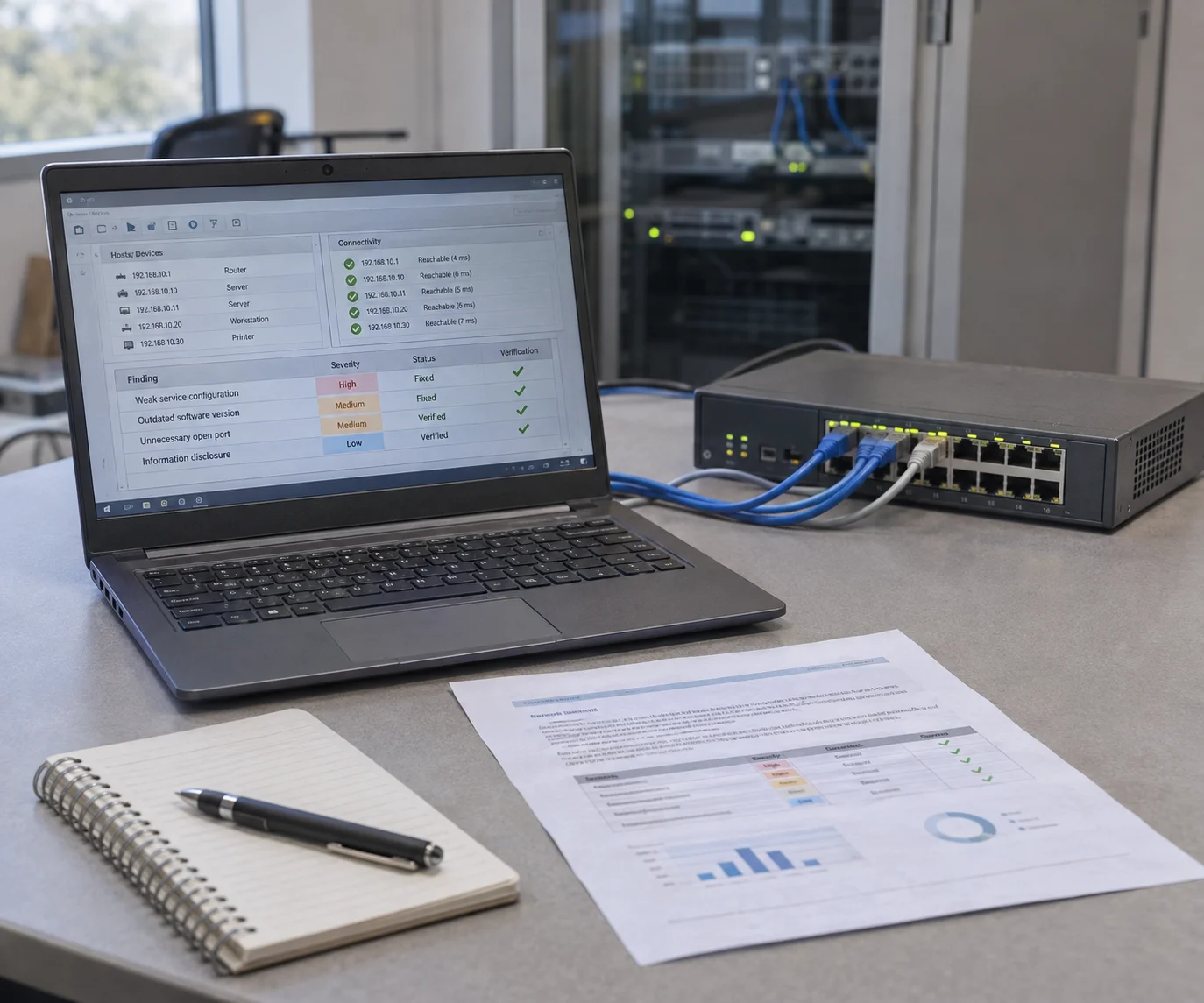
A Cytrix Security network test report lists affected systems, exploitation results and a criticality rating for each issue. It also records the test protocol: the tools and techniques used and the systems covered.
Cytrix Security usually runs internal and external testing together. External testing starts from the internet-facing edge; internal testing assumes someone already has a starting point inside your offices.
A Cytrix Security network test is priced on how much is tested, mainly the number of IPs in range and how much testing each one needs.
A Cytrix Security network test is run in a safe and controlled way. Intrusive checks are agreed in advance and scheduled for quiet hours, and testing stops if a system shows signs of strain.